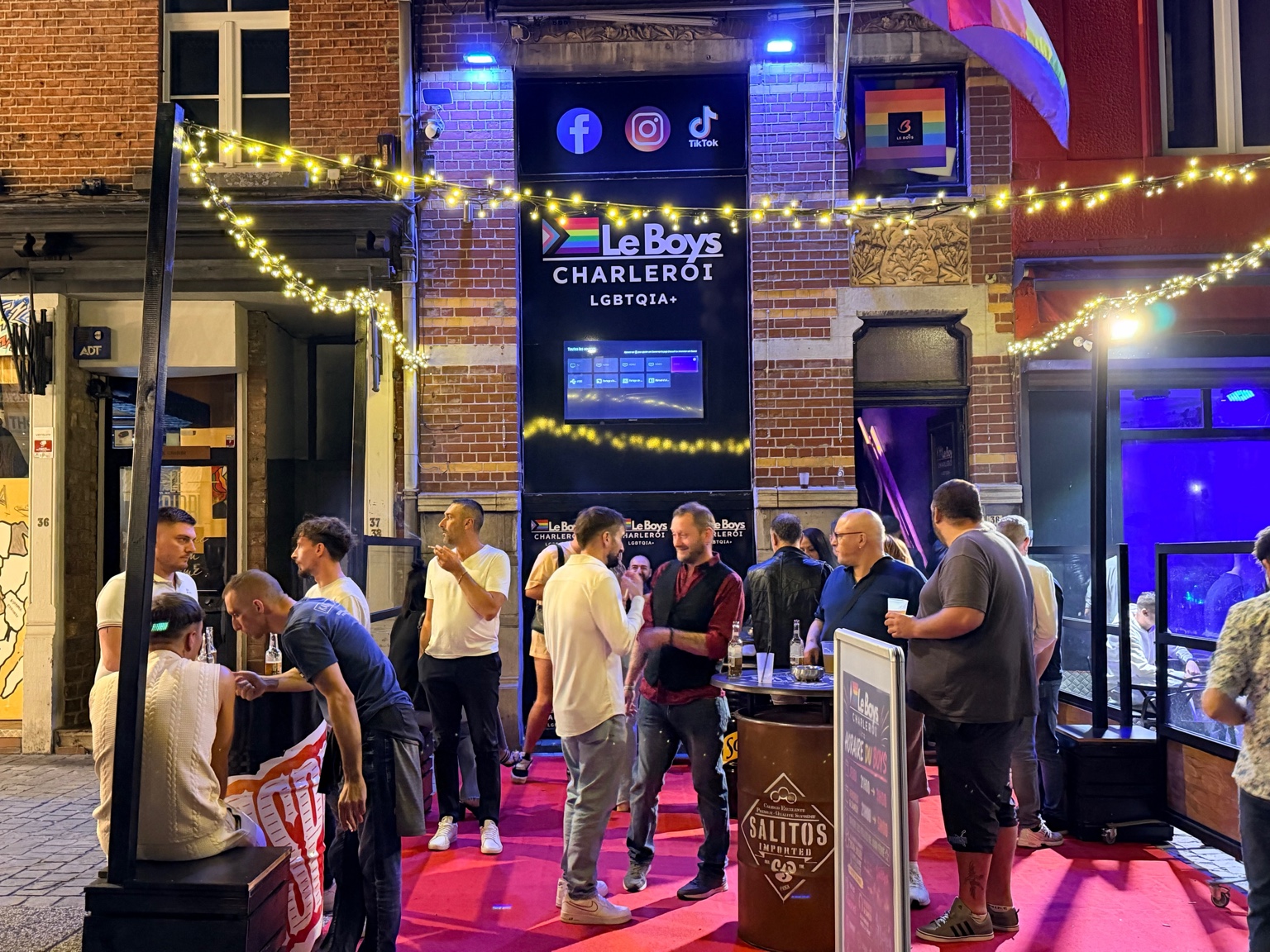
 Photos provided by the venue · 4
Bar · Place de la Digue
Le Boys Charleroi
Le Boys is an LGBTQIA+ bar in Charleroi. Check the local queer organisation’s programme for its upcoming nights.
◷ Thu 21:00–03:00; Fri–Sat 21:00–05:00View details →2 spots
Charleroi
Charleroi is part of the urban and industrial landscape of Hainaut.
Cultural visits and community services work best as specific stops with their own addresses and programmes.
Charleroi: plan your visit
Charleroi is part of the urban and industrial landscape of Hainaut. Cultural visits and community services work best as specific stops with their own addresses and programmes. The directory offers different kinds of stops, including Le Boys Charleroi / Maison Arc-en-Ciel de Charleroi. Read the place type and visitor notes to choose what fits your visit, and check its individual access conditions.
Use the full street address to compare the outward and return journeys. Check the local operator’s route planner for your date, including the last service; proximity on a city map does not guarantee a convenient late-night connection.
Before visiting, use the place’s official notice for your date to confirm opening or programme times, admission rules and any booking or membership requirement. For an event, check the year and exact venue; an old poster does not confirm a current edition.
City at a glance
Concise guideCharleroi currently has 2 listed places, so this guide keeps the essentials concise. Near Me shows only 2 places with supported location evidence.
Photos provided by the venue · 4Bar · Place de la Digue
Gay-popular / mixed · Charleroi
Affiliate link · AFTERORA may receive a commission at no extra cost to you; proceeds help cover site operating costs.
Belgium became independent in 1830 and later developed into a federal state with Dutch, French and German as official languages.
Belgium became independent in 1830 and later developed into a federal state with Dutch, French and German as official languages.
Independence, industrialisation and two world wars shaped the modern state.
State reforms since 1970 divided powers among communities and regions. Colonial rule in Congo and its legacy remain essential historical context.
Marriage equality and anti-discrimination law are major milestones, while community organisations connect Brussels, Flanders and Wallonia.
Same-sex marriage has been available since 2003. Sexual orientation is protected under anti-discrimination law, and conversion practices have been criminal offences since 2023.
Brussels Pride marked 30 years in 2026. RainbowHouse, Prisme, Het Roze Huis and Magenta are key public starting points for current community information.
Belgium is multilingual. Place names, community-house names and event information may appear in Dutch, French or German.
Messaging and meeting apps: WhatsApp and Messenger can be used for contact; Grindr and ROMEO have Belgian app listings. Review privacy and precise-location settings.
Messaging or a verified first-party business contact channel.
Messaging or a verified first-party business contact channel.
Dating or LGBTQ+ social discovery; review privacy and location settings.
Dating or LGBTQ+ social discovery; review privacy and location settings.
Maps, transport and events: Compare the venue name, street number and city on Google Maps and the local map. Confirm an event’s actual location on the organiser’s dated page.
Map, route or local place search.
Booking, reviews, tickets, transport or travel planning.
Community, events or social discovery; verify current context.
Check each venue’s named Google Maps business page for category, address and opening information. Use local maps for the address and verify social links separately.
Legal protection does not guarantee the same welcome or safety in every setting. Confirm entry rules, return transport and current event details.
Limit live-location and identity sharing. Check consent, photography and belongings rules in clubs, saunas and sexual meeting spaces.
Call 112 for ambulance or fire emergencies and 101 for urgent police help. Unia, Ex Æquo and Sensoa provide public information and support pathways.
Hours, entry policies, and events can change. Recheck official channels and maps on the day you visit.